Sunday, April 3, 2016

The Unnatural Kingdom

I never got a reply about the word count, so I'll just assume that it's alright that I went over.

One of the methods mentioned in the article is the Relocation of certain members of a species to a different area, specifically pregnant females. Females with diverse genetics are brought to a different group of that species to repopulate elsewhere, allowing that different group to pass on their genes as well. For the purposes of the assignment, I’ll call this method “Maternal Relocation.” Another method mentioned in the article is what I’ll call “Predator Prevention.” The predators of a specific species are directly managed to benefit the species which they are hunting. If a single predator is found to be preying more heavily than conservationists deem safe for the hunted species, that predator is killed.
Both of these methods are meant, in all goodness, to save an endangered and human-loved species. Both methods also obviously require large amounts of human intervention in natural events, be it good or bad. They also both require large amounts of technology, like radar and GPS, to monitor animal activity. This requires a fairly large amount of data-crunching, as well as data analysis. Conservationists must consider many factors when deciding whether or not to implement either method.
But there are some key differences between the two methods. Maternal Relocation requires direct intervention with the species itself. If anything goes wrong, that could result in the death of one or more members of the species, bringing them even closer to extinction. Predator Prevention, on the other hand, requires the manipulation of the number of predators hunting the species. Different groups of animals are killed, without ever touching the species itself. It could be argued that an innocent animal is killed simply for attempting to survive in a harsh world. Predator Prevention also, obviously, involves the death of an animal, which is not featured in Maternal Relocation.
I believe that Maternal Relocation both has a greater chance of success and is more morally sound and acceptable than Predator Prevention. With Maternal Relocation, if conservationists deem that they incorrectly moved a number of animals, they can always relocate them again. You can’t reverse the death of an animal, as with Predator Prevention. There’s no saying that conservationists couldn’t make a mistake and accidentally kill off too many animals, possibly having dire consequences on the predator species. Additionally, animal rights groups would most likely not agree with the method, and possibly protest, which could further slow down programs attempting to protect endangered species.
Because of the Maternal Relocation method (which just-so-happens to be appropriate for this section,) groups of bighorn sheep that would not normally meet are being brought together to mate. Without human intervention, the California desert’s vast tracts of land and large mountains would have prevented sheep populations from mixing. Isolated groups would evolve separately from their also-isolated counterparts. Eventually, after thousands of years, their DNA would have become so different that they could not naturally produce fertile offspring together, essentially becoming different species. This phenomenon is referred to as geographic isolation. Maternal Relocation makes this nearly impossible, so groups of bighorn sheep will all have breed together at some point. This would not allow for enough time to pass for geographic isolation to truly occur. However, conservationists are attempting to artificially produce much-needed diversity by relocating pregnant females that have been found to be genetically diverse. While this is not necessarily as effective as natural geographic isolation, it’s certainly better than nothing.
The definition of a “wild” animal and the guidelines that may make it such are not entirely clear. I would personally define a wild animal as being an animal whose habitat and living space is not within a human-built area. This means that a lion living in a wildlife refuge center would not be a wild animal. A lion living on the African plains near a human settlement would be wild, because the humans are essentially living on the lion’ territory. It could, however, be argued that a wild animal is one that is not under the direct influence of humans. This would make the restored populations referenced in the article not wild. I would disagree with this, because although the restored populations are heavily influenced by humans, they still roam free, and are not fed by humans, nor do they rely on humans for their survival.

Wednesday, January 13, 2016

Topic 1 - Public Health


    Despite the numerous benefits of farming livestock, many facilities have created serious public health risks. The use of antibiotics in animals began in the 1940s in the poultry industry. These chemicals encourage growth and production in the animals. The use of antibiotics, however, also has produced a large number of antimicrobial bacteria. These bacteria, added with those from human antibiotic use, has resulted in cases of drug-resistant infections in humans, which are being more common at an alarming rate. This is also due to the increase in the use of antibiotics and growth hormones in livestock. Agricultural workers are believed to be the bridge for bacteria between the livestock and the general human population. Toxic gases and dusts in these facilities have also caused respiratory diseases for agricultural workers and those living nearby. In addition, many animal farming facilities are located in places unfit to handle large amounts of nutrients and pathogens resulting from the practice. Animal waste, when untreated, is harmful to the surrounding ecosystem. Runoff from these facilities also contains many dangerous chemicals, hormones, and heavy metals that leak into ecosystems, especially those in lakes and streams. The large amounts of energy used to maintain these facilities also produces a large strain on the environment.
    As time has passed and new technologies have been developed, the yield from animal farming has increased drastically. Rich countries demand more and more meat, requiring an even higher yield from these facilities. However, this rapid increase in the number of animal farming facilities has had a large negative impact on the environment, despite what economic benefits have been reaped. Only with strict guidelines and legislation can these facilities be managed and balanced, so that meat and animal product prices do not become too high for the consumer, while the environment is not harmed further.
    One solution is to encourage consumers to press for alternative factory practices. Factories rely on consumers to for their profits, and campaigns to pressure these companies into helping to protect the environment would greatly reduce the risk of having to shut down animal farming facilities due to environmental concerns. This has already happened with the public’s concern for animal welfare, however, this is only part of the problem; while assisting animals may be important, not changing the practices of these facilities will have an even greater effect on humans.

Citation:
  • "Pollution from Giant Livestock Farms Threatens Public Health." NRDC. Natural Resources Defense Council, 21 Feb. 2013. Web. 13 Jan. 2016.
  • "Environmental Destruction." Vegan Outreach. Vegan Outreach, n.d. Web. 13 Jan. 2016. (Picture)


Tuesday, January 5, 2016

EROEI

1. The tar sands should be used before the oil shale because it has a higher EROEI. This means that we'll get a better energy return on the investment of mining, and possibly give more time for technology to develop that will allow for easier extraction of oil shale.

2. Both tar sands and oil shale must be heated at some point in order to extract the oil.

3. When oil shale is heated, it turns directly into crude oil and natural gas. Tar sands, on the other hand, create bitumen when heated, which must be refined into usable oil.

4. It will take a long time for renewable energy sources to fully replace fossil fuels as the nation's main energy source. Energy must be produced during this time. If off shore drilling were to be banned, energy companies would be forced to buy oil from outside sources in other countries. This oil could be less carbon efficient than that which could be mined from off shore drilling.

5. Say that I wanted to eat lunch one day. I have, in general, two options; I could make something for myself, or go out and buy something. Making pasta or a grilled cheese for myself isn't very difficult. I would also no longer be hungry, though I may not be terribly satisfied, as when I make food for myself, it's generally one of about four meals. Going out for lunch, on the other hand, would be somewhat difficult. I would either have to get somebody to drive me or have to drive myself. This would use up gas, and the lunch I buy will likely be more expensive than my food at home. However, I would be more satisfied with this meal, because it was made by someone else and probably tastes better than what I make, along with the general factor of variety. Staying at home costs very little energy, but only has a moderate return in terms of happiness. Going out costs a lot of energy, but also has a large happiness return. I usually end up staying home (mostly because I don't have a license anyways.)

Tuesday, December 1, 2015

Haber-Bosch Process

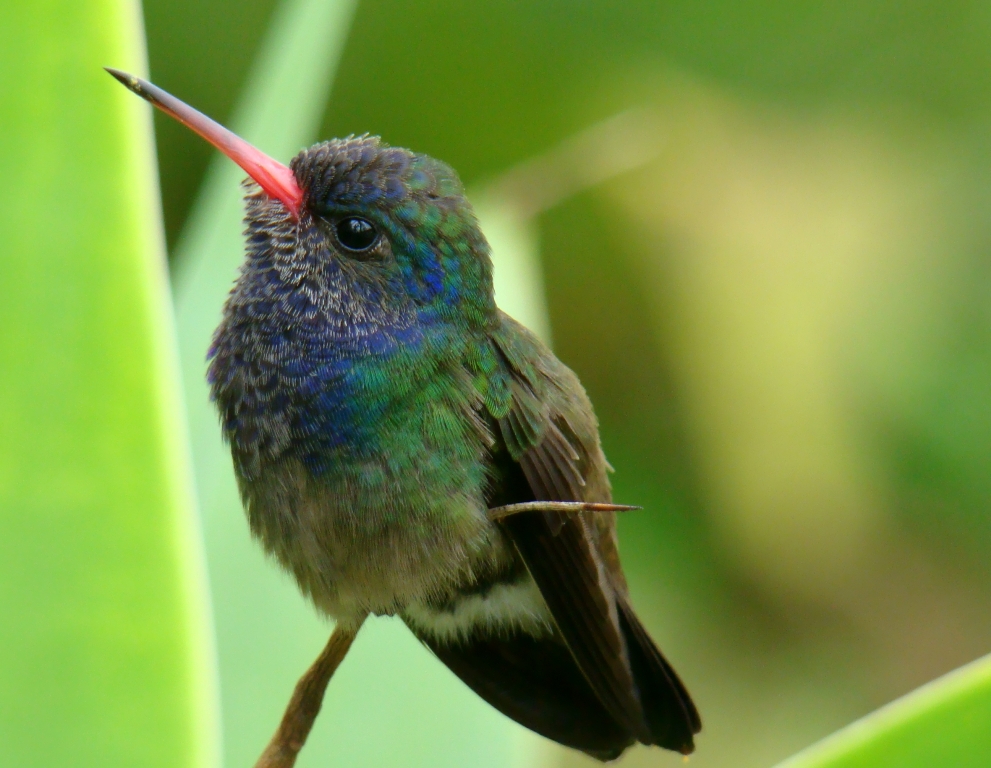
The Hummingbird

The Haber-Bosch process was created in the early 20th century by German chemist Fritz Haber, and was later industrialized by another German chemist named Carl Bosch. The process converts nitrogen (N2) and hydrogen (H) into ammonia (NH3), a colorless chemical used by humans in fertilizer. This fertilizer, with its high nitrogen content, has been extremely successful in assisting the growth of crops, and, quote, “It’s been estimated that almost half of the world’s current population subsists on crops grown with the output of the Haber-Bosch process.” (Kolbert, Elizabeth. "Head Count." The New Yorker. The New Yorker, 21 Oct. 2013. Web. 30 Nov. 2015.)
While a process that converts relatively abundant chemicals into something that can assist with the growth of crops, the Haber-Bosch process has had an overall negative effect on the world.
Let’s start with the world’s current population issues. As of 2015, the world population is around 7 billion, give or take a couple hundred million. The human population reached one billion during the late 1700s and early 1800s. In the late 1970s, the world population was around 3 billion. The population had tripled in around 170 years. Now, almost 50 years later, the population has more than doubled (a population’s doubling is its percentage rate of increase over 70.) The predictions for the world’s population growth don’t seem to hold much promise as well. Quote, “The latest population projections from the United Nations were released in June. If they’re correct, by 2025 there will be eight billion people on the planet. By 2050, there will be nine and a half billion, and by 2100 there will be nearly eleven billion.” (Kolbert, Elizabeth. "Head Count." The New Yorker. The New Yorker, 21 Oct. 2013. Web. 30 Nov. 2015.)
Total fertility rate, or T.F.R., is used to predict population growths. This figure shows a rough average of how many children a woman will bear in her lifetime. T.F.R. numbers vary throughout the world, depending on many political and economic factors. A rate of around one is necessary to bring the world’s population back down to two billion within two or three generations (Kolbert, Elizabeth. "Head Count." The New Yorker. The New Yorker, 21 Oct. 2013. Web. 30 Nov. 2015.) While the T.F.R. is dropping in many countries, with a rate of 1.1 in Taiwan, 1.2 in South Korea, and most European countries having a rate under 1.5. Many countries still, however, have very high rates. Niger’s T.F.R. is 7.0, Mali’s is 6.25, and Somalia’s is 6.17. These countries are producing more children than people can die off, increasing the Earth’s population and contributing to a problem already caused by the Haber-Bosch Process.
The world needs to eat. This is very obvious, and many people living in first world countries can’t imagine a day without food. It seems counter intuitive that the Haber-Bosch process, which allowed more crops to be grown than have been in all of history, could negatively impact humanity. But it increased the human population more than is possibly sustainable with our current technologies and political climates.

Bibliography:

  • Kolbert, Elizabeth. "Head Count." The New Yorker. The New Yorker, 21 Oct. 2013. Web. 30 Nov. 2015.
  • Clark, Jim. "The Haber Process for the Manufacture of Ammonia." The Haber Process for the Manufacture of Ammonia. N.p., 2002. Web. 01 Dec. 2015.
  • "Ammonia." Ammonia. National Institute of Health, n.d. Web. 01 Dec. 2015.

Wednesday, October 28, 2015

Seneca Lake Research Question and Methods

Question: Are the efforts to control the population of sea lamprey in Seneca Lake properly helping to stop them from hurting the native fish population?

The majestic sea lamprey

Variables:
Controlled Variables- What lake we are in, the day we go on, the methods we use to collect data, what sort of data we collect, how the data is processed.
Independent Variable- The locations that we are measuring and their respective depths.
Relevant Variables- How many fish are caught, the weather on the day there are caught, how many fish are found to have been affected by sea lamprey.

    Sea lampreys are a parasitic fish native to the Atlantic Ocean. They use their suction cup-like mouths and many rows of teeth to stick onto fish and suck their blood and other bodily fluids. Fish in the Atlantic Ocean have evolved to resist the effects of this parasite and are therefore not killed by it, however, fish in the Great Lakes are either killed by the initial wound or the infection that comes afterwards. Sea lampreys were first spotted in the Great Lakes in 1835 in Lake Ontario, but have since spread to other Great Lakes and Finger Lakes, including Seneca Lake. The Great Lakes Fishery Commission has been working to kill sea lamprey larvae and prevent adults from moving out into the lake.


(Citations:

 "Seneca Lake." DEC.NY. New York State Department of Environmental Conservation, n.d. Web. 26 Oct. 2015.
GLIN. "Sea Lamprey." GLFC. Great Lakes Fishery Commission, n.d. Web. 26 Oct. 2015.
GLIN. "Sea Lamprey Control in the Great Lakes." GLFC. Great Lakes Fishery Commission, n.d. Web. 26 Oct. 2015.
"The Future of Sea Lamprey Control." GLFC. Great Lakes Fishery Commission, n.d. Web. 27 Oct. 2015.)


Hypothesis: I believe that we will find very few fish that have been effected by sea lamprey. The Great Lakes Fishery Commission has been working to control their populations, and has reported great success. Several techniques have been used to reduce their numbers, as reported in my fourth citation, from "The Future of Sea Lamprey Control".


Plan to Control Variables:

  • Make sure that the boat stays in one place at each location and doesn't drift at all (i.e. with an anchor.)
  • Use the same size net for each location, making sure to leave it in for the same amount of time.
  • Use the same methods to take every measurement, and take the same measurements for each location.
  • Record every latitude and longitude, as well as the depth for each location.
  • Allow the net to drift to the bottom every time.
Procedure:
  1. Find a large casting net with thin mesh and ropes on the end and pack this onto the boat.
  2. Navigate the boat out to a fairly shallow location, between 20-50 feet in depth. Anchor there and record your latitude and longitude.
  3. Cast out your net and allow it to sink to the bottom.
  4. Reel in the net and count how many fish are in the net, and their species.
  5. Find how many of these fish have large, circular bite marks on their sides or actual sea lamprey attached to them. Record these numbers.
  6. Once recorded, release the fish back into the water.
  7. Repeat steps 5 and 6 four more times.
  8. Lift your anchor.
  9. Navigate to a new location, with a depth between 50-100 feet, and drop the anchor. Record your latitude and longitude.
  10. Repeat steps 3-7 for this new location.
  11. Lift your anchor.
  12. Navigate to a new location, with a depth greater than 100 feet, and drop the anchor. Record your latitude and longitude.
  13. Repeat steps 3-7 for this new location.
  14. Process your data.
Question: Has the Finger Lakes Institute or Hobart and William Smith Colleges not bought a new boat because they don't have enough money, or because they feel that their current one is good enough for their purposes? (I mean, come on. They got the boat in 1976, and who knows how long it's been on the waters. I know they did renovations in 1989, but you can only fix a boat so much. You'd figure they'd have gotten a new one by now, especially since they put children on it.)

Thursday, October 22, 2015

Personal Impacts on the Carbon Cycle


  • Exhale carbon dioxide via respiration.
  • Consume primary producers.
  • Consume primary and secondary consumers.
  • Indirectly use fossil fuels (i.e. I don't burn my own coal, but I use electricity produced by that method.)
  • Drive a car that uses carbon-based petrol.

Wednesday, October 14, 2015

The Tropic Forest Biome

    Hummingbirds a very adaptable species, and are spread all around the Americas. This means that they inhabit many biomes. In light of this, I have decided to focus on the bee hummingbird, the smallest species of hummingbird, which inhabits the forests in Cuba.
    Bee hummingbirds are found in Tropical Forest biomes, and is endemic to Cuba. The biomes are found between latitudes 23.5°N and 23.5°S, near the equator, and cover about 6% of the world's surface. They are characterized by tall, dense trees, and a canopy of leaves high above the ground. This canopy typically blocks out a large amount of sunlight from shining on the ground. These areas usually get over 100 inches of rain every year, and the temperature is typically between 20°C and 34°C. Because of their closeness to the equator, Tropical Forests have around 12 hours of sunlight year-round, with only slight variations from the Earth's tilt. There are only two distinct seasons in these biomes; a rainy season and a dry season. The length of each varies depending on the area. Humidity is very high, staying between 77 and 88%.
    Tropical Forests have very diverse flaura and fauna populations. One example is the red eyed tree frog. They are named for their very large, bright red eyes. When these frogs close their eyes, their green color allows them to blend in with the surrounding leaves. Scientists believe that their eyes have evolved as such for a defense mechanisms known as "startle colorization". Red eyed tree frogs are nocturnal, and therefore have no form of defense during the day, save for their camouflaging color. If they were woken by a predator, and opened their eyes, the stark color could scare the predator away. Another example is the boa constrictor. Adult boas are usually around 13 feet long, with the females generally being smaller. Their color varies by region, but are generally brown and tan, with a distinct pattern running down their length. This coloring allows them to camouflage themselves with the forest floor, an adaptation that has helped them survive their forest environment. A final example is the Rafflesia flower. These are found in south-east Asia, and holds the record for the largest blooming flower in the world. They are parasitic, and have evolved to taste like dung or rotten meat. Their red color also warns flies and other forest creatures to stay away, allowing for it to survive.
    Tropical Forest biomes are in danger of being completely wiped out due to human deforestation. This is a major issue, as rainforests are predicted to hold half of the world's species of plants and animals, and are essential ecosystems. Large companies chop down their towering trees and sell the wood for a high profit, yet never replant anything, leaving only barren fields and creatures without a habitat. Houses and other human settlements are also built on the grounds of these forests. This can be solved by passing and enforcing anti-deforestation laws, which would require the support of politicians and lawmakers not just in America, but around the world. But that would not necessarily be enough; miles and miles of habitats would have to be rebuilt, by planting millions of new trees. This would be terribly difficult, though if enough support was gained, not impossible.
    The bee hummingbird functions as a nectar-feeding pollinator for plants within its ecosystem. It has a mutualistic relationship with many plants species; the plants provide nutrients for the hummingbird through their nectar, while the hummingbird spreads pollen to other plants, aiding in cross breeding among species.

    The bee hummingbird is both a primary and secondary consumer. It is primary because it drinks the nectar from flowers, which are producers, directly. It is a secondary consumer because it eats small insects within these flowers, which themselves feed on the pollen in the flowers. Tertiary consumers like hawks hunt these hummingbirds as well. Hawks are at the top of the food chain, and therefore have no predators.    The bee hummingbird does not have very many competitors, save for insects. It's main competition, however, comes as the Cuban Emerald Hummingbird, known as the "zun-zun" in Cuba. The Cuban Emerald is larger than the bee hummingbird, with the average males being about 10cm in length. They both must compete for nectar from flowers, as they have very similar diets, and both help to pollinate flowers within their ecosystems.

Sources:

"CUBAN FALCONIFORMES - Falcons, Hawks, Eagles, Ospreys." CUBAN BIRDS. N.p., n.d. Web. 14 Oct. 2015. <http://www.nhptv.org/wild/cubanbirdsFalconiformes.asp>.
Ballard, Kacey. "The Forest Biome." The Forest Biome. Ed. Stephanie Pullen. UCMP Berkely, Fall 1996. Web. 13 Oct. 2015. <http://www.ucmp.berkeley.edu/glossary/gloss5/biome/forests.html>.
"Bee Hummingbird." Wildscreen Arkive. N.p., n.d. Web. 13 Oct. 2015. <http://www.arkive.org/bee-hummingbird/mellisuga-helenae/>.
"Boa Constrictor." Fact Sheet. N.p., n.d. Web. 14 Oct. 2015. <http://nationalzoo.si.edu/Animals/ReptilesAmphibians/Facts/FactSheets/Boaconstrictor.cfm>.
"CUBAN FALCONIFORMES - Falcons, Hawks, Eagles, Ospreys." CUBAN BIRDS. N.p., n.d. Web. 14 Oct. 2015. <http://www.nhptv.org/wild/cubanbirdsFalconiformes.asp>.
"The Forest Biome." The Forest Biome. N.p., n.d. Web. 14 Oct. 2015. <http://www.ucmp.berkeley.edu/exhibits/biomes/forests.php#tropical>.
"Rafflesia Arnoldii (corpse Flower)." Rafflesia Arnoldii (corpse Flower). N.p., n.d. Web. 14 Oct. 2015. <http://www.kew.org/science-conservation/plants-fungi/rafflesia-arnoldii-corpse-flower>.
"Tropical Deforestation : Feature Articles." Tropical Deforestation : Feature Articles. N.p., n.d. Web. 14 Oct. 2015. <http://earthobservatory.nasa.gov/Features/Deforestation/>.
"ViƱales Valley." - UNESCO World Heritage Centre. UNESCO, n.d. Web. 13 Oct. 2015. <http://whc.unesco.org/en/list/840>.

Wednesday, October 7, 2015

Wednesday, September 30, 2015

Biomagnification Case Study

    Biomagnification is the process of a chemical moving through a food chain, eventually reaching the topmost organisms. As the chemical moves through the food chain, it is accumulated into a larger and larger part of the organism's diet.
    Mercury is a heavy element characterized by its metallic silver color and how it uniquely is in a liquid state in standard temperature and pressure conditions (0 °C and 14.5 psi, respectively). Mercury is most commonly used in thermometers to measure temperature because of its high coefficient of expansion. However, due to the toxicity of the chemical, mercury is rarely used for modern thermometers. Mercury is also used in electrical switches, dental fillings, and as a disinfectant. Most mercury that ends up in ecosystems comes from the air. Burning coal results in airborne Mercury, as does the mining of other metals. The disposal of products containing mercury can also result in mercury contamination.
    The case study of the Great Lakes by the United States Environmental Protection Agency gives the example of phytoplankton as a starting place for biomaginification. While there may be only a small amount of a substance like mercury, phytoplankton bioaccumulate it at a much higher concentration. Zooplankton eat phytoplankton, and absorb this high concentration of mercury. Even more mercury accumulates in these organisms. The zooplankton are eaten by small fish, the small fish are eaten by large fish, the large fish are eaten by seagulls, and so on. As each predator eats its prey, mercury is accumulated at higher and higher concentrations, thus moving up through the food chain.
    The study that I used suggested remediating contaminated sediments and reducing PCB loadings into the Great Lakes as a way to help reduce the effects and possibly stop the contamination of the lakes. Finding alternatives to mercury in various products could also reduce the amount of mercury that is released into the environment. Mercury is a very dangerous substance, and has no place within foreign ecosystems, and it is our job to find a way to remove it.

Sources:

"Biomagnification." Definition Page. N.p., n.d. Web. 29 Sept. 2015.
<http://toxics.usgs.gov/definitions/biomagnification.html>.

"Great Lakes Monitoring." Great Lakes Monitoring. N.p., n.d. Web. 29 Sept. 2015. 
<http://www3.epa.gov/grtlakes/glindicators/fishtoxics/topfishb.html>.

"Mercury." Mercury. N.p., n.d. Web. 29 Sept. 2015. 
<http://nature.berkeley.edu/classes/eps2/wisc/hg.html>.

"What Is Innovation and Where Does It Come From?" Portfolio Management (2012): n. pag. Web. 29 Sept. 2015.

Tuesday, September 29, 2015